
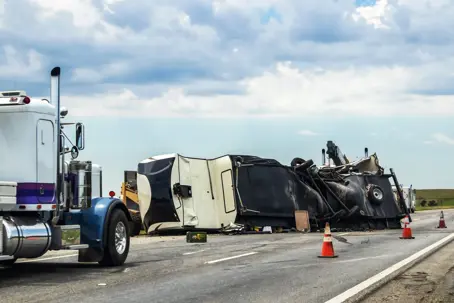
Interstate 70 is one of the busiest and most heavily traveled corridors in Colorado. Running directly through Denver and connecting the metro area to mountain communities and out-of-state trucking routes, I-70 sees constant traffic from commuters, tourists, delivery vehicles, and commercial semi-trucks.
When a crash involves a semi-truck on I-70, the consequences are often far more serious than a standard car accident. These collisions tend to result in catastrophic injuries, extensive property damage, and complicated legal questions. In many cases, they also involve multiple parties who may share responsibility for what happened.
Understanding why I-70 truck accidents are so complex is an important first step for anyone trying to protect their rights after a serious crash.
I-70 Traffic Patterns Create High-Risk Conditions
I-70 is not a typical highway. In the Denver area, it functions as a major artery that carries high volumes of traffic at nearly all hours of the day. Congestion is common, and sudden slowdowns can happen without warning. This creates dangerous conditions when large commercial trucks share the road with smaller passenger vehicles.
Semi-trucks require significantly more time and distance to stop. When traffic slows quickly, a truck driver may not be able to brake in time, particularly if they are distracted, fatigued, or following too closely. The result can be a violent rear-end collision or multi-vehicle pileup.
In addition, construction zones and lane shifts along I-70 are frequent. These changes increase the likelihood of sideswipe collisions, merging accidents, and crashes involving trucks that drift out of their lanes.
Commercial Routes Mean More Truck Traffic and More Pressure
Denver is a hub for commercial trucking. I-70 is a primary route for freight moving east and west across the country. It is also heavily used by trucks traveling to and from distribution centers, industrial areas, and delivery hubs throughout the metro region.
This constant flow of commercial vehicles creates unique risks. Truck drivers are often operating under strict delivery deadlines and may feel pressure to stay on the road longer than they should. Some may speed, ignore rest requirements, or take risks in traffic to make up time.
The volume of truck traffic also increases the likelihood of collisions involving multiple commercial vehicles, making investigations and insurance claims more difficult.
Truck Accidents Often Involve Multiple Liable Parties
In a typical car accident, liability usually comes down to one driver’s negligence. Truck accident cases are rarely that simple.
A semi-truck collision on I-70 may involve several parties, each with its own insurance coverage and legal teams. Depending on the facts of the crash, responsibility may extend beyond the truck driver.
Potential liable parties may include:
- The trucking company, if it failed to properly train the driver, forced unsafe schedules, or neglected safety policies
- A maintenance provider, if brake failure, tire blowouts, or mechanical defects played a role
- A cargo loading company, if improperly secured or overloaded freight, contributed to the crash
- A truck or parts manufacturer, if a defective component caused loss of control
- A third-party driver, if another vehicle triggered the chain of events that led to the collision
Identifying every responsible party is critical in serious injury cases. It can also make the legal process more complex, especially when multiple insurers are involved, and each one tries to shift blame.
Federal Trucking Regulations Add Another Layer of Complexity
Semi-truck accidents are governed not only by Colorado traffic laws but also by federal trucking regulations. These rules cover issues like driver hours, required rest breaks, inspection requirements, and maintenance standards.
Violations of these regulations can provide important evidence in a truck accident claim. However, proving those violations often requires quick action and a thorough investigation. Trucking companies may have access to key records such as driver logs, GPS data, dispatch communications, and electronic control module data. In many cases, these records can disappear or be altered if they are not preserved early.
This is one reason why truck accident claims demand a more aggressive and experienced approach than standard car crash cases.
Serious Injuries Require Serious Legal Preparation
Because semi-truck accidents frequently involve catastrophic injuries, the financial stakes are much higher. Victims may face long-term medical care, lost earning capacity, permanent disability, and significant pain and suffering.
Insurance companies know this. They often respond by fighting harder, disputing medical evidence, or pushing quick settlements before the full impact of the injuries is known.
A successful I-70 truck accident case requires detailed preparation, strong evidence, and a legal team willing to take the case to trial if necessary.
Talk to a Denver Truck Accident Lawyer Who Understands What’s at Stake
If you or someone you love was injured in a semi-truck accident on I-70, it is important to understand what you are up against. These cases are complex, and trucking companies rarely make the process easy.
Denver Trial Lawyers® is prepared to investigate serious truck accidents and pursue the full compensation injury victims deserve. To learn more about your legal options, contact our team for a free consultation.